


Battery Monitoring
7 products in total


When putting together a DC installation for the marine or mobile market, there is more to take in to consideration than just the correct choice of battery and associated charging systems. All sorts of other items can have something to do with the battery or are connected to it and can significantly impact the end result.
Battery usage indicator – knowledge is power
The WhisperPower Battery Monitor (WBM) is a universal battery monitor that displays the status of the battery with very high precision. The WBM provides a look ‘inside’ the battery and is essential for preserving long battery life. Via the display, the following information is brought up:
- The main battery voltage (V)
- The power consumption indicated in am- pere-hours (Ah)
- Power consumption in amperes (A) Charge current of battery charger, combi, solar panels, windmills, etc.
- Battery capacity in %
- Remaining battery capacity and “time remaining” in minutes and hours (Pro Series)
Automatic start function
The WhisperPower Battery Monitor can also be used as a means of automatically starting a DC or AC generator, based on the battery voltage or battery condition. This is achieved via RS 232 communication (order RS 232 option). Please note that your generator must be suitable for this function. WhisperPower generators are standard equipped with an automatic start/stop adjustment kit.
remote communication
The WBM, fitted with the RS 232 option, can be used to remotely monitor power systems using a cell or an internet connection.
Why monitor a battery at all?
Voltage alone tells you very little about a battery. It sags under load, rises again when the load drops, and on lithium it stays almost flat until the bank is nearly empty. Battery monitoring measures the current flowing in and out through a shunt and counts it, so you see the actual state of charge, how much you are consuming right now, and how long you can keep going.
That turns two guesses into facts: whether the bank really gets full on shore power or on a short engine run, and whether your consumption matches the capacity you installed.
What do I need?
- A shunt with a monitor — the basis. The shunt goes in the negative lead of the bank and counts every ampere in both directions.
- A temperature sensor — charge voltage should be corrected for temperature on lead batteries, and a temperature reading warns you before a problem becomes damage.
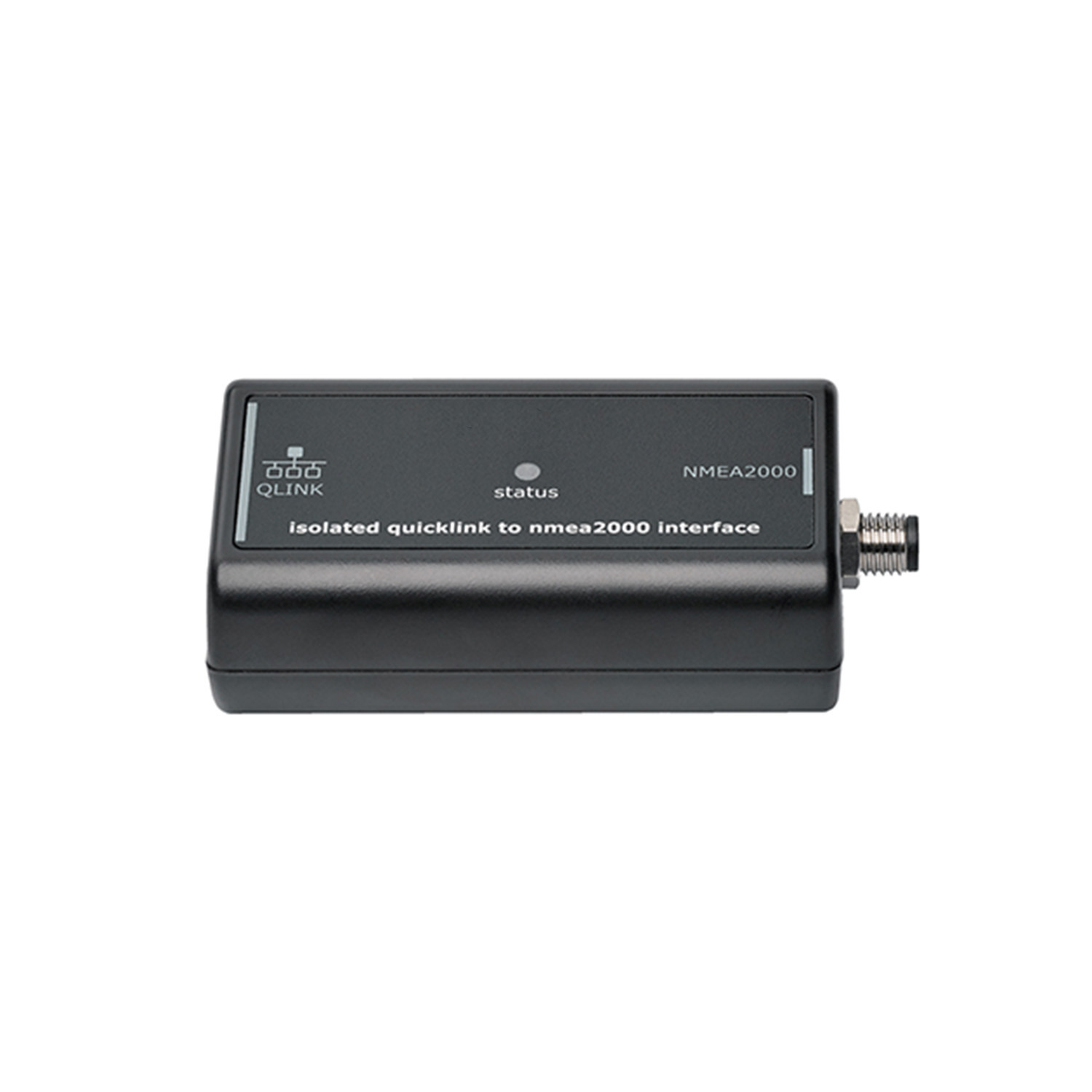
- A link to the rest of the boat or vehicle — an NMEA 2000 connection puts the battery data on the existing plotter or display, and a data logger records it over time.
The range
The WBM Modular Smart Shunt for measuring current and state of charge, with an optional temperature sensor kit and an NMEA 2000 communication kit. The BMSS PRO Battery Monitor as a complete monitor, plus interfaces such as the WPC-BSI 500 Battery Status Interface, the WPC-BTS temperature sensor and the WPC-RS232i data logger module for systems that have to log or communicate.
Where it is used
Anywhere the battery bank is doing real work: yachts and commercial vessels in the marine market, motorhomes and special vehicles in mobile applications, and off-grid installations where nobody is standing next to the system. It pays off most with lithium banks, where voltage says almost nothing.
Advice or purchase
Monitoring is chosen together with the bank and the charge sources. Put your installation to a dealer near you, or see the rest of monitoring and control.